
News
Company, funding, product and policy news from across the quantum industry, as it happens.
-
Today
-
NSF Awards $600,000 to Stony Brook and University of Hawaiʻi to Advance Distributed Quantum Intelligent Sensor Networks
Researchers at Stony Brook University and the University of Hawaiʻi at Mānoa have been awarded a $600,000 NSF grant to develop Quantum Intelligent Sensor Networks (QISNs). This project aims to advance quantum metrology by engineering distributed, entangled sensor nodes that work together as a coordinated system, rather than optimizing single isolated sensors. The research will focus on using distributed quantum resources to extract weak, spatially varying signals beyond classical sensing limits, with applications in environmental monitoring, disaster preparedness, magnetic field imaging, and resilient communications.
-
UC Santa Barbara Researchers Join Three NSF Quantum Leap Challenge Institutes Under $290 Million Portfolio Renewal
UCSB faculty will participate in three NSF Quantum Leap Challenge Institutes (QLCI), sharing $290 million in renewed and new funding. This initiative, under the National Quantum Initiative Act, focuses on accelerating quantum research into manufacturing by integrating academic researchers with national laboratories and private industry. The QLCI program also aims to develop a quantum engineering talent pipeline through various educational and internship programs.
-
Diraq Expands U.S. Footprint with New Mexico Quantum R&D Laboratory to Advance DARPA QBI Milestones
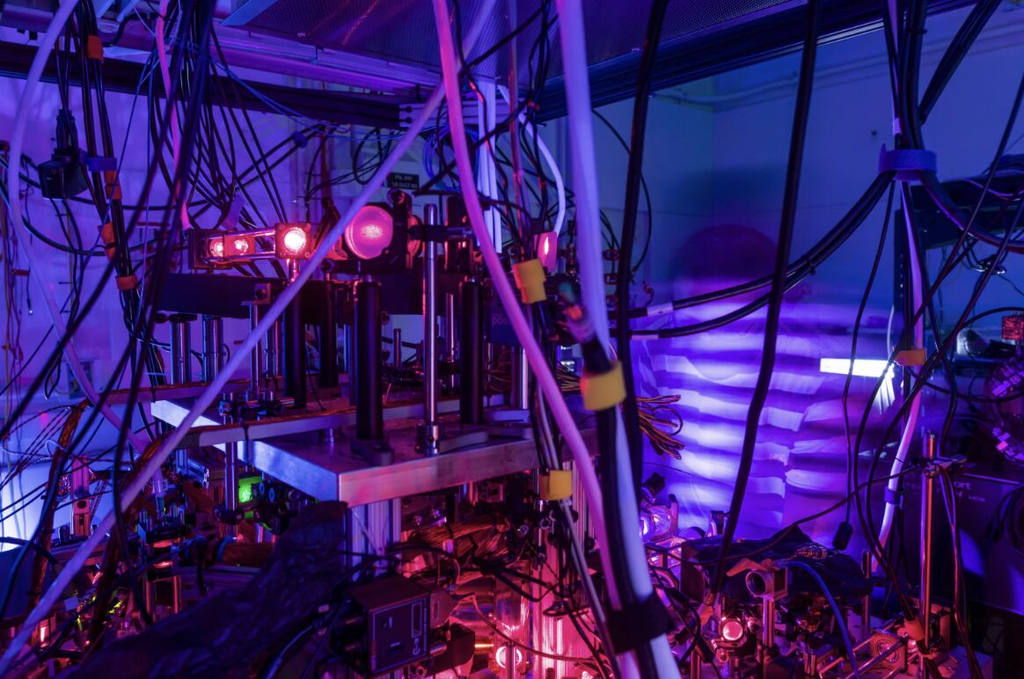
Diraq is expanding its U.S. operations by opening a new quantum R&D lab in Albuquerque, New Mexico, in collaboration with the New Mexico Technology and Innovation Office and Roadrunner Venture Studios. This expansion, supported by New Mexico's quantum technology allocation, will focus on characterizing high-density silicon spin-qubit chips for the DARPA Quantum Benchmarking Initiative. The lab, operational by late 2026, aims to advance utility-scale fault-tolerant quantum computing by leveraging CMOS fabrication for high-density qubit packing.
-
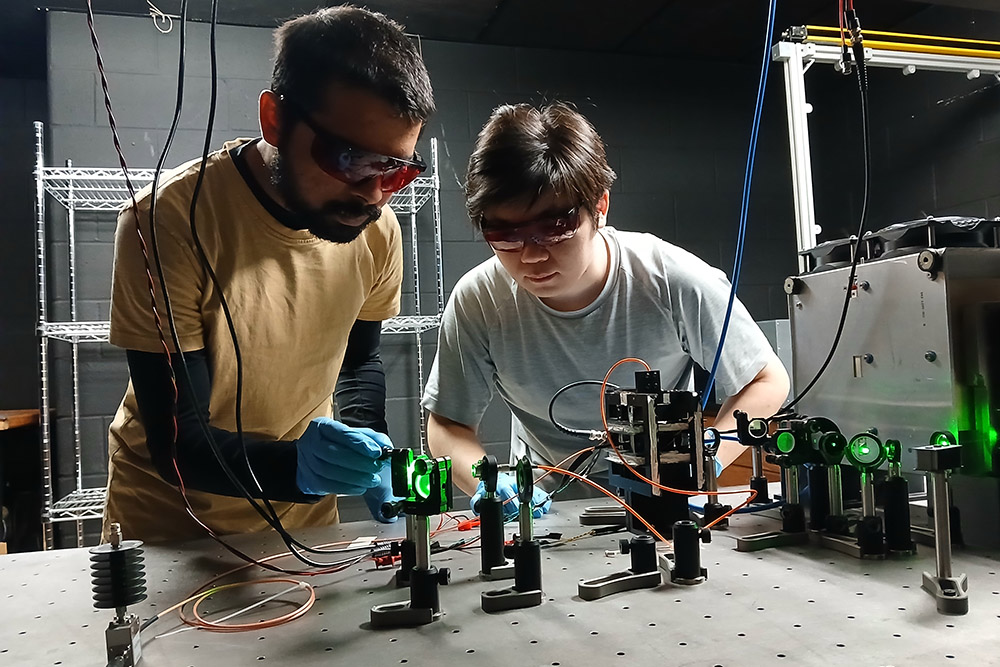
Roadrunner Quantum Lab Opens 35,000-Square-Foot Albuquerque Facility with Initial Cohort of Quantum Startups, National Labs, and Ecosystem Partners
The Roadrunner Quantum Lab (RQL) has opened a 35,000-square-foot facility in Albuquerque, New Mexico, serving as a hub for quantum technology testing and commercialization. Supported by $25 million in state funding, it houses 15 quantum hardware, software, sensing, and capital partners, facilitating the transition of quantum physics research into commercial hardware. The RQL integrates various quantum technologies and provides access to national lab scientists, aiming to be a key launchpad for utility-scale quantum hardware commercialization.
-
Cloudflare Launches Public Certificate Authority to Secure the Web Against Quantum Threats
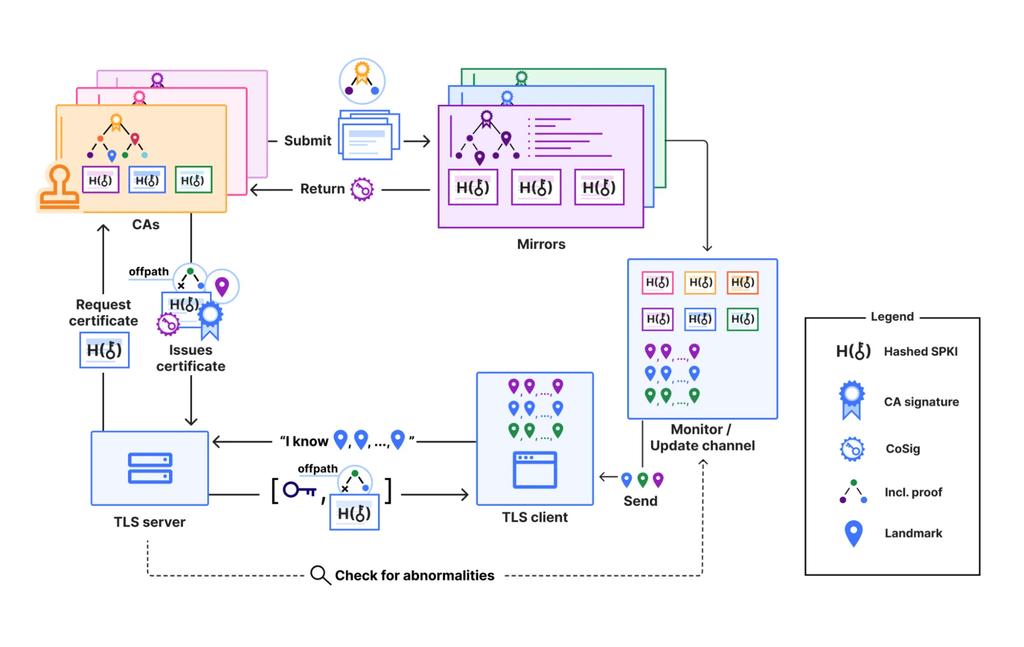
Cloudflare is becoming a public Certificate Authority (CA) to secure the web against quantum threats by introducing an open, automated, and high-scale issuance service. This initiative will provide both classical TLS certificates and next-generation Merkle Tree Certificates (MTCs) to prevent widespread web outages and combat "harvest now, decrypt later" adversary campaigns. By acquiring GlobalSign's Root CA key material and applying for inclusion in major root programs, Cloudflare aims to establish immediate backward compatibility and build standing under emerging browser policies.
-
Xanadu and Bluefors Form Multi-Million Dollar Strategic Partnership to Develop Modular Cryogenic Infrastructure for Utility-Scale Quantum Data Centers
Xanadu and Bluefors have formed a multi-million dollar partnership to develop a modular cryogenic infrastructure for utility-scale quantum data centers. Their joint effort focuses on replacing large, centralized cryoplants with compact, mass-manufacturable cryogenic modules designed for high-density detector arrays operating near 2 Kelvin. This collaboration aims to address cooling bottlenecks and provide a scalable, standardized cryogenic solution for fault-tolerant photonic quantum processors.
-
Project Eleven Acquires Riva Labs to Scale Post-Quantum Cryptography and Blockchain Infrastructure Stack
Project Eleven has acquired Riva Labs to create a comprehensive post-quantum cryptography and blockchain infrastructure. This merger addresses vulnerabilities in current public-key cryptography by integrating quantum-resistant solutions directly into the technology stack. The combined entity will focus on developing agile post-quantum migration frameworks, utilizing AI-driven research to adapt to evolving cryptographic standards and ensure practical, scalable solutions for decentralized networks.
-
Infleqtion and Riverlane Execute Strategic MOU to Integrate Neutral-Atom Hardware with Real-Time QEC Decoders
Infleqtion and Riverlane have partnered to integrate real-time quantum error correction with neutral-atom hardware. This collaboration aims to close the latency gap in qubit error detection and processing, enabling scalable logical qubits. They will combine Infleqtion's neutral-atom QPU and qLDPC software with Riverlane's Deltaflow decoding platform to run dynamic error correction cycles without interrupting execution.
-
Royal Bank of Canada Launches Enterprise Quantum Strategy and Academic Workforce Pipelines
Royal Bank of Canada (RBC) has launched a multi-year enterprise quantum strategy focusing on internal R&D, post-quantum cybersecurity, academic partnerships, and hardware investments. This initiative includes collaborations with Xanadu, the University of Waterloo, and the University of Toronto to develop quantum applications for financial modeling, optimize portfolios, analyze risk, and enhance cryptographic security. RBC is also migrating to Post-Quantum Cryptography (PQC) standards and Quantum Key Distribution (QKD) and has invested in Photonic Inc.
-
-
Yesterday
-
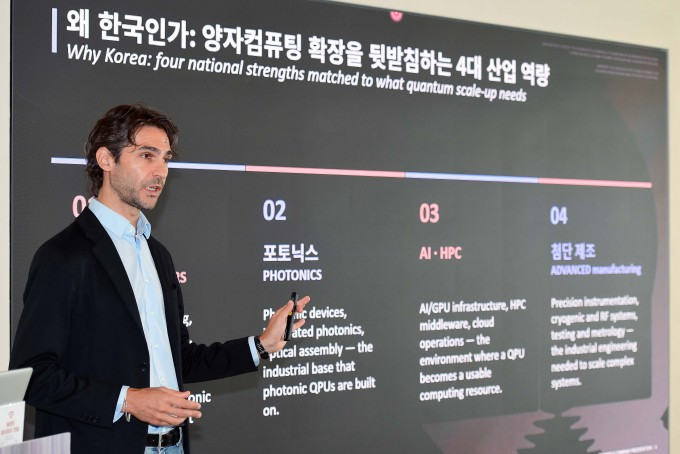
Quandela Establishes South Korea as Asian Hub for Photonic QPU Manufacturing and Hardware R&D
Quandela is establishing South Korea as its Asian hub for photonic QPU manufacturing and R&D, aiming to partner with South Korean semiconductor foundries and optoelectronic integrators. This initiative will focus on scaling mass production of photonic control chips and optical component packaging, with collaborations including KAIST for electronic control units, KRIBB for molecular simulation, and NVIDIA for reduced GPU-to-QPU communication latency. The expansion includes growing Quandela Korea and deploying Korean-fabricated components into Quandela's QPUs.
-
Pasqal Restructures French Government Collaboration and Secures EIC Recognition Following Nasdaq Debut
Pasqal, a neutral-atom quantum hardware developer, has restructured its collaboration with French authorities to focus on civil, commercial-led fault-tolerant quantum computing, moving away from defense initiatives. This strategic shift follows its Nasdaq debut and aims to accelerate commercial deployments. Additionally, Pasqal received an EIC Fund Award, recognizing its transition from a deep-tech startup to a publicly traded quantum computer manufacturer.
-
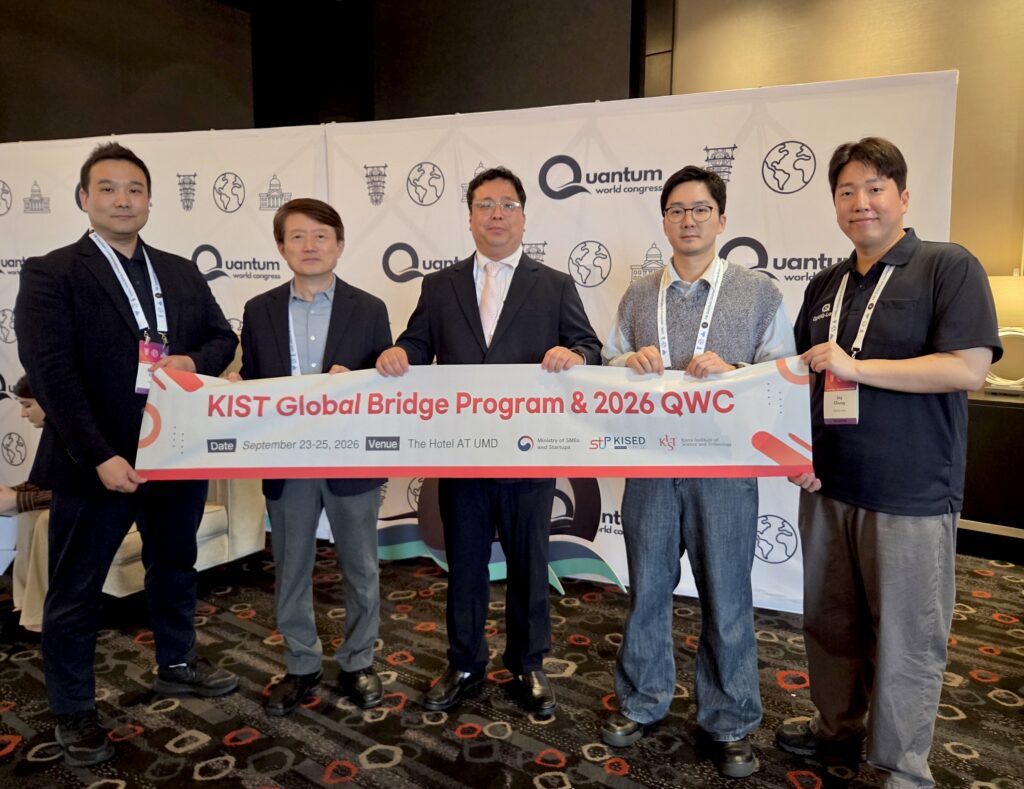
KIST Delegation at Quantum World Congress 2026 Advances Korean Quantum Startup Ecosystem and U.S. Market Entry
A delegation from the Korea Institute of Science and Technology (KIST) attended the Quantum World Congress (QWC) 2026, fostering international partnerships and U.S. market entry for Korean quantum startups. KIST secured collaborations with entities like D-Wave Systems and Microsoft, aiming to bolster the quantum industry. Notably, OptiQ-Labs is set to establish a U.S. East Coast headquarters, marking a significant step in the global commercialization of Korean quantum technologies.
-
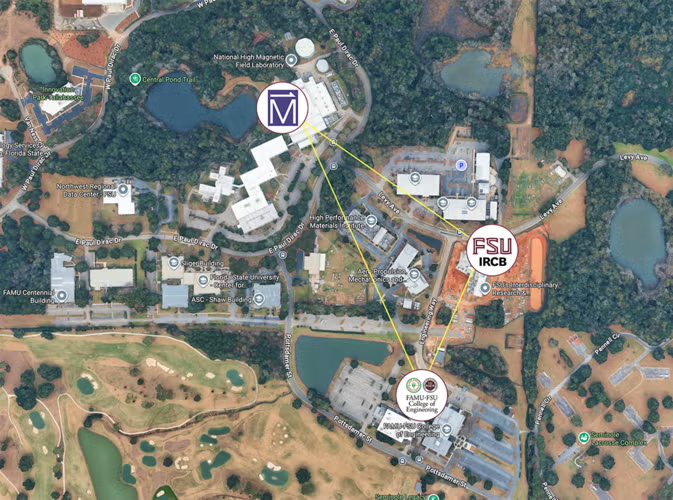
Florida State University Secures $2.1M Federal Grant for Campus-Scale Quantum Communication Testbed
Florida State University has received a $2.1 million federal grant to establish the first campus-scale quantum communication testbed in the southeastern U.S. This testbed will connect a central quantum optics hub to receiver nodes at the FAMU-FSU College of Engineering and the National High Magnetic Field Laboratory. The project will evaluate quantum key distribution and networking hardware under various environmental stresses, including atmospheric turbulence, high magnetic fields, and cryogenic temperatures.
-
University of Vienna Demonstrates First In-Orbit Operation of a Programmable Quantum Photonic Processor
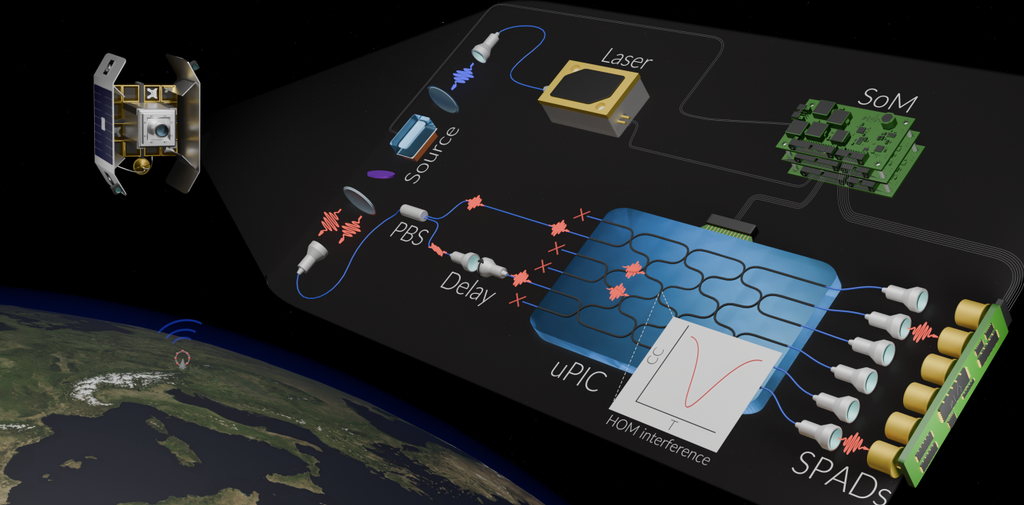
A research team from the University of Vienna and VCQ has successfully demonstrated the first in-orbit operation of a programmable quantum photonic processor on a nanosatellite. This achievement transitions spaceborne quantum hardware from communication to active, on-board edge quantum processing. The system performed two-photon quantum interference and programmable matrix execution, proving the viability of quantum machine learning for tasks like onboard satellite image analysis and data reduction.
-
Horizon Europe Launches €5M ($5.67M USD) Q-VERSE Consortium to Build Hardware-Agnostic Quantum Software Stack
The Horizon Europe Q-VERSE consortium, funded with €5 million, is developing an open, hardware-agnostic quantum software stack. This initiative aims to unify quantum application development by decoupling it from low-level QPU architectures, utilizing the Eclipse Qrisp framework and standardized intermediate representations. The project, led by Fraunhofer FOKUS, involves 13 partners and will validate its platform across five industrial use cases, including railway scheduling and financial optimization.
-
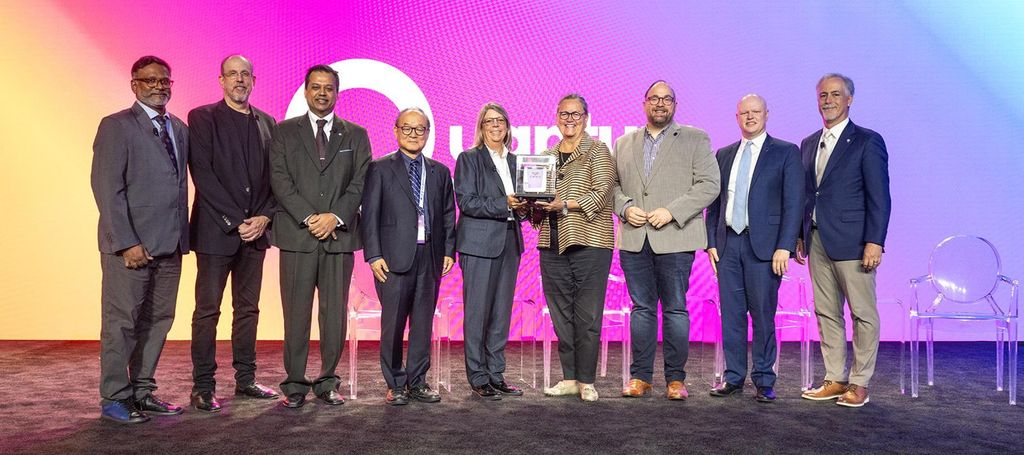
Messe Stuttgart Announces Winners of the Quantum Effects Award 2026 Across Four Hardware and Software Categories
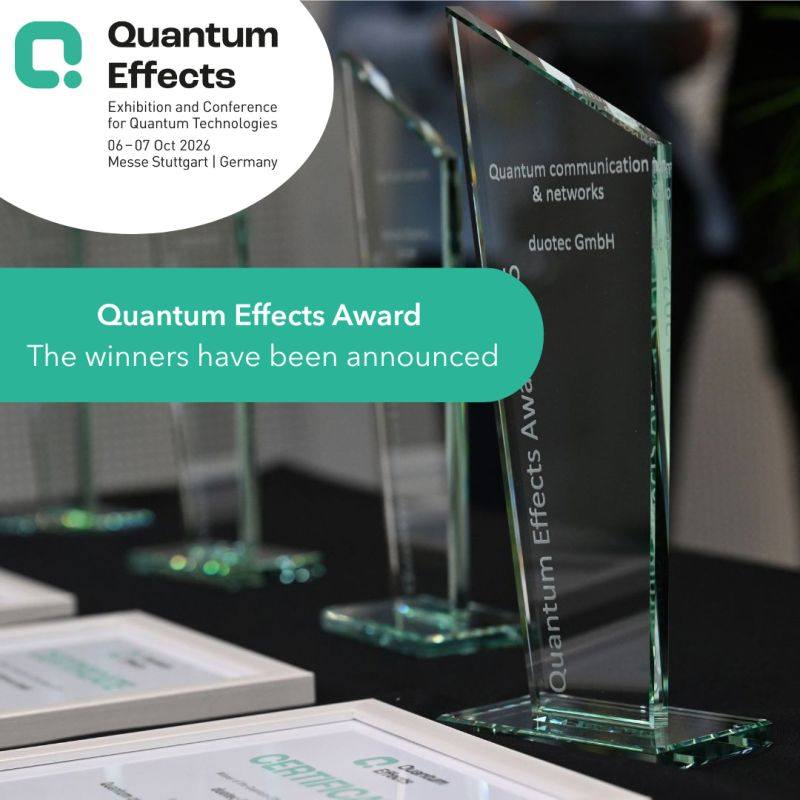
Messe Stuttgart announced the winners of the Quantum Effects Award 2026 across four categories: C12 & Thales for Quantum Computing Hardware, Fraunhofer FOKUS for Quantum Computing Software, QSENSATO SRL for Quantum Sensing, and PicoQuant GmbH for Quantum Communication. These awards recognize application-oriented technical developments at TRL 5 or higher, showcasing direct industry utility and pathways for commercial deployment in the quantum technology sector.
-
Quantum eMotion to Acquire Plurilock for C$33.8M ($23.8M USD) to Commercialize Quantum-Safe Cybersecurity Platform
Quantum eMotion (QeM) is set to acquire Plurilock Security Inc. for C$33.8 million, creating a quantum-safe cybersecurity platform. The deal, expected to close in late 2026, combines QeM's quantum hardware with Plurilock's AI-driven cybersecurity to enhance access control and identity management. Plurilock shareholders will receive C$0.084 in cash and 0.0763 QeM shares per Plurilock share, totaling C$0.28 per share.
-
-
-
Quobly and CEA-Leti Strengthen Collaboration via FAMES Pilot Line to Scale 300 mm Silicon Spin-Qubit Platform
Quobly and CEA-Leti are strengthening their collaboration through the FAMES Pilot Line, providing Quobly access to advanced processing tools for prototyping 3D integration and RF control layers for next-generation quantum processing units (QPUs). This partnership, alongside STMicroelectronics, aims to scale Quobly's QSOI® architecture, which integrates silicon spin qubits directly onto a 300 mm FD-SOI CMOS substrate. Quobly plans to offer initial cloud availability for its Alloy Pioneer processor family by late 2026, targeting large-scale, fault-tolerant silicon architectures by 2032.
-
-
-
Who’s News: Strategic Appointments at D-Wave Quantum, Oxford Quantum Circuits, and Bifrost Electronics
Bernard Gavgani joins D-Wave Quantum's board, bringing fintech and cybersecurity expertise. Simon Phillips is now CPO at Oxford Quantum Circuits, focusing on commercializing Quantum-AI platforms, and Doug Campbell is the new CEO of Bifrost Electronics, leading the commercialization of their Heimdall Amplifier.
-
ETSI Identifies Technical Limitations and Implementation Vulnerabilities in Quantum Random Number Generators (ETSI TR 104 171)
ETSI's new report, TR 104 171, addresses vulnerabilities in Quantum Random Number Generators (QRNGs) due to practical hardware limitations. It provides guidelines across the QRNG lifecycle, including the Entropy Zero Trust (EZT) framework to mitigate side-channel attacks. The report also sets priorities for future standardization, such as API command sets and integration with post-quantum cryptography.
-
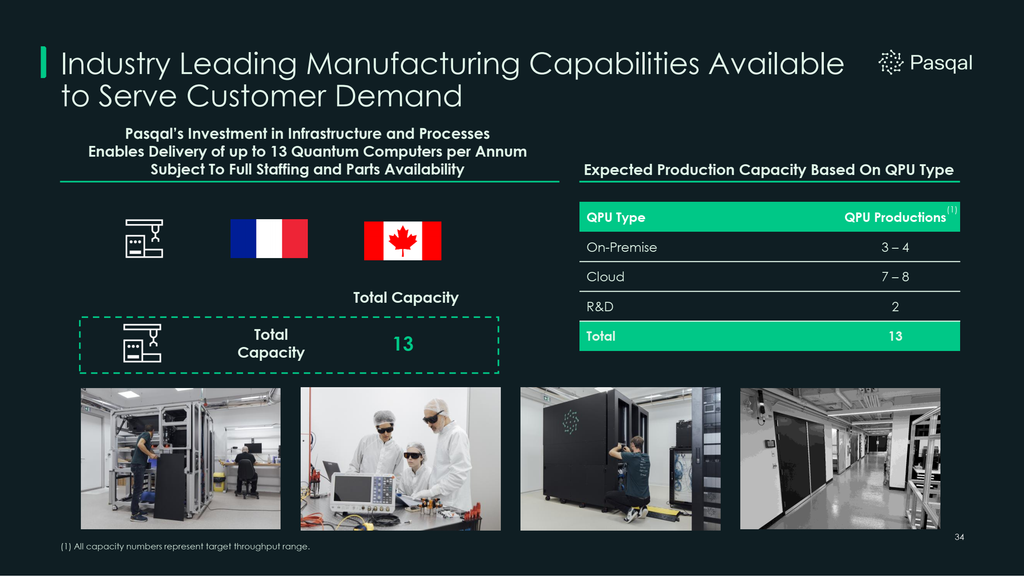
Pasqal Reports H1 2026 Financial Results: €312.9M Post-SPAC Cash Balance, 14% Revenue Growth, and 1,000-Atom Scale
Pasqal reported strong H1 2026 financial results with €312.9M post-SPAC cash and 14% revenue growth. The company achieved significant technological breakthroughs, including scaling to 1,024 atoms and demonstrating logical qubit execution. Pasqal also expanded commercially with new deployments in Saudi Arabia and Italy, and became an XPRIZE finalist.
-
-
-
Fairfax County Public Schools to Install XeedQ 4-Qubit Quantum Computer at Skyview High School
Fairfax County Public Schools (FCPS) will be the first K-12 public high school to install a physical quantum computer, the XeedQ XQ1e, at Skyview High School in December 2026. This 4-qubit quantum computer operates at room temperature and offers high-fidelity quantum computing for student learning. The initiative aims to create a regional talent development hub in quantum computing.
-
European Commission Approves eCAUSIS Results as Creotech Quantum Prepares QKD System for Commercial Rollout
Creotech Quantum's eCAUSIS project, funded by Horizon Europe, has received European Commission approval for its DV-QKD platform, transitioning it from R&D to commercial production. The project, with a total budget of nearly €7 million, involved Creotech Quantum as coordinator, along with AIT Austrian Institute of Technology and Fraunhofer Society. This initiative establishes a European supply chain for QKD modules, with an initial capacity of 1,000 units per year, potentially expanding to 10,000 annually.
-
Creotech Quantum Wins €2.33M ($2.66M USD) ESA Contract for Space-Grade Quantum Detectors
Creotech Quantum has secured a €2.33M contract from the European Space Agency (ESA) to develop advanced Superconducting Nanowire Single-Photon Detectors (SNSPDs) over 24 months. These detectors will be crucial for European quantum key distribution networks and deep-space optical communication, reaching Technology Readiness Level 5 (TRL 5). Creotech Quantum will lead the consortium, overseeing the design, manufacturing, and validation of the SNSPDs.
-
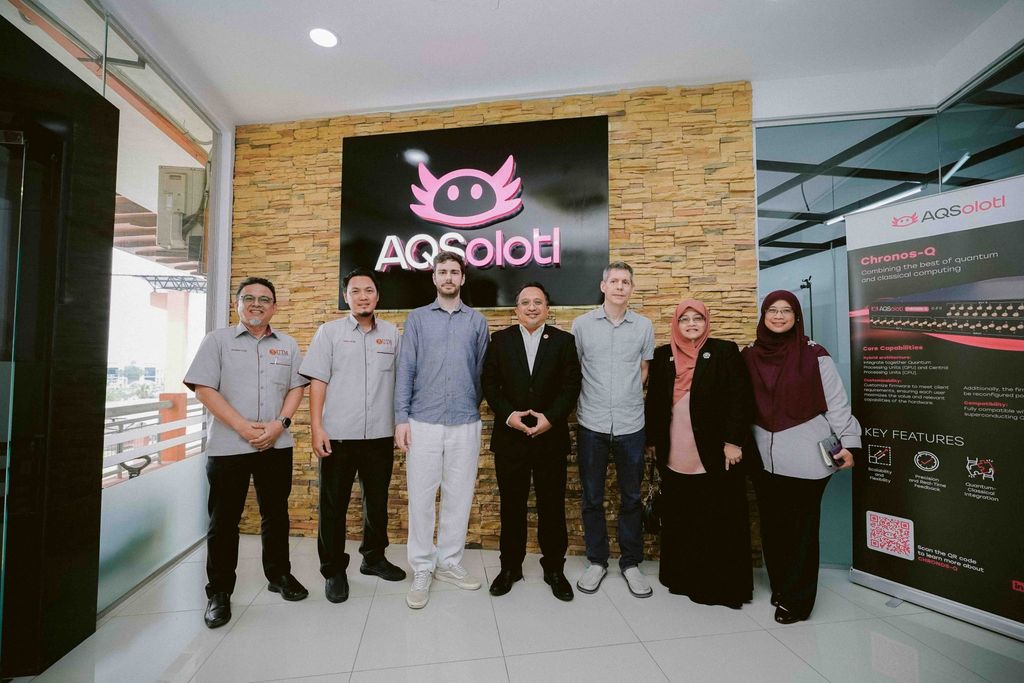
UTM Technovation Park Becomes R&D Base for AQSolotl, Malaysia’s First Quantum Computing Hardware Company
AQSolotl, Malaysia's first quantum computing hardware company, has established its R&D operations at UTM Technovation Park in Johor Bahru. This Singapore-based startup will focus on designing and producing high-precision quantum computer control electronics, leveraging UTM's research programs and creating a cross-border talent and commercialization corridor between Malaysia and Singapore. The company's CTO, Dr. Yap Yung Szen, is a UTM researcher recognized in UNESCO’s global Quantum 100 initiative.
-